

Google with Monks : ค้นหาหนังสือธรรมะ หน้า 25 / 36
หน้าหนังสือทั้งหมด
53
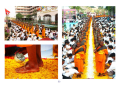
International Buddhist Festival at Sri Lanka
Monks walking with alms bowls
A monk pouring water over his feet on flowers
Devotees presenting offerings
75
Dhammakāya and the Previous Buddha
VII. Reference 4: Dhammakāya and Previous Buddha
Another Pāli passage that shows the relation of dhammakāya with the Buddha is found in the Atthasandassakathera-apadāna. But here the narrative relates
บทความนี้วิเคราะห์ความสัมพันธ์ของคำว่า Dhammakāya กับพระพุทธเจ้าในพระอัฏฐสังคษา โดยมีการเล่าถึงชีวิตของพระอรหันต์ Atthasandassaka ที่มีความคิดถึงพระพุทธเจ้า Padumuttara และการยกย่องพระพุทธเจ้าในบทกวีส
94
Buddhist Manuscript Formats in Dai Region
Volume 98 Khuddaka-nikāya (小阿含经) and Volume 99 Majjhima-nikāya (中阿含经) are all in 5-line to 6-line format manuscripts; Volume 100 Digha-nikāya (长阿含经) is in 4-line to 5-line-format. The jäṭaka Wexiandal
Volume 98 Khuddaka-nikāya and Volume 99 Majjhima-nikāya are primarily in 5-6 line formats, while Volume 100 Digha-nikāya is formatted with 4-5 lines per page. The jäṭaka Wexiandala represents a key Bu
102
Wisdom and the Dhammakāya in Buddhist Teachings
Some of the qualities or forms of wisdom listed in the text are exclusive to Buddhas such as omniscience (sabbaññutāna), intrepdity (vesārajjanāna), and the ten supreme intellectual powers of a Buddha
The text highlights unique qualities of wisdom exclusive to Buddhas, including omniscience and the ten intellectual powers. It discusses the dhammakāya as the embodiment of a Buddha's inner wisdom, di
127
The Practice of Ānāpānasmṛti: Breath Meditation in Early Buddhism
describing the practice of the four smrtyṣhānas associated with the breath (ānāpānasmṛti), and resulting the attainment of the three vimoksamukhās.42
An Shigao’s translation of the Ānāpānasmṛti Sūtra
This text delves into the practice of Ānāpānasmṛti, a significant Buddhist meditation focused on breath. It highlights An Shigao’s translation of the Ānāpānasmṛti Sūtra and its influence on later monk
13
การเดินทางและระยะทางในภูฏาน
- ระยะทาง = distance (คิดเป็นกิโลเมตร)
- The total distance for this Bhutanana is 446 kilometers.
- จุดสุด = Dhutanga or pilgrimage (จุดสุดหรือ พิธีศักดิ์สิทธิ์)
- เส้นทาง = establish (เส้นทางนี้)
- T
ระยะทางรวมสำหรับการเดินทางในภูฏานนี้คือ 446 กิโลเมตร โดยพระอาจารย์เดินทางมาถึงระยะทาง 150.2 กิโลเมตร ซึ่งอยู่ห่างจากจุดนี้ประมาณ 3 กิโลเมตร ควรคำนึงถึงความสำคัญของการทำความดีและการเดินทางเพื่อพิธีศักด
44
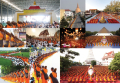
There is no readable text in the image to perform OCR on. The image contains multiple photos of large gatherings of monks, temples, and ceremonies at a Buddhist site.
22
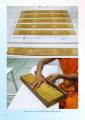
Project for Collecting Palm Leaf Manuscript to Dhamma monks & foundations
Interview conducted and completed
www.dmc.tv
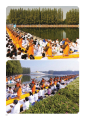
14
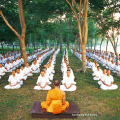
The image contains two photos of a large gathering of people, including monks dressed in orange robes and laypeople, seated by the water during what appears to be a religious or cultural event. There
574
หลักฐานธรรมาภายในคัมภีร์พุทธโบราณ 1 ฉบับวิชาการ
หลักฐานธรรมาภายในคัมภีร์พุทธโบราณ 1 ฉบับวิชาการ
Manicheaism and Mazdaism in China." Diogenes 50 (4): 61-68.
Takakusu, J. 1975. The Essentials of Buddhist Philosophy. Edited by W.-t. Chan and C. A. Mo
งานวิจัยนี้สำรวจความสำคัญของคัมภีร์พุทธโบราณและว่ามีการพัฒนาอย่างไรในบริบทของการศึกษาพุทธศาสตร์ โดยนำเสนอคำพิสูจน์และแนวคิดจากนักวิชาการที่เคยศึกษาและทำงานในด้านนี้ รวมถึงมุมมองจากผู้ทรงคุณวุฒิในวงการ
36
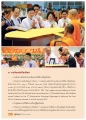
การเดินทางด้วยทิวลิปดอกไม้และการจุดโดมาน
การเดินทางด้วยทิวลิปดอกไม้ที่ยาวที่สุดในโลก
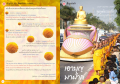
รางวัลประกาศเกียรติคุณรางวัลแรก “การเดินทางด้วยทิวลิปดอกไม้ที่ยาวที่สุดในโลกด้วยระยะทางรวม ๕๕๓.o กิโลเมตร (๒8๑.๔๘ ไมล์) โดยพระภิกษุในพระพุทธศาสนาจำนวน ๑,๒๙๗
บทความนี้นำเสนอรางวัลประกาศเกียรติคุณเกี่ยวกับการเดินทางที่ยาวที่สุดในโลกด้วยทิวลิปดอกไม้ ระยะทาง 553.0 กิโลเมตร โดยพระภิกษุ 1,297 รูป ในปี 2559 และการจุดโดมานด้วยเทียน 5,999 เล่ม ซึ่งจัดขึ้นโดยศูนย์ส
48
Seven Kinds of Offerings to the Sangha
" There are seven kinds of offerings made to the Sangha, Ānanda.
One gives a gift to a Sangha of both [bhikkhus and bhikkhunīs] headed by the Buddha; this is the first kind of offering made to the San
This text outlines the seven kinds of offerings one can make to the Sangha, including gifts to the collective body of monks and nuns, and individual offerings specifying bhikkhus or bhikkhunīs. The fi
70
The Viktor of Absorbing: Insights from Velama Sutta
The Viktor of Absorbing
7. Velama Sutta
"If one were to have a dwelling built and dedicated
to the Community of the four directions, that would be
more fruitful than... if one were to feed a communit
The Velama Sutta emphasizes that the true fruits of spiritual practice are found in building a strong foundation in faith and ethical conduct. Constructing a dwelling for the community is commendable,
72
Velama Sutta: The Power of Good Will
The Voice of Abstaining
7. Velama Sutta
“If one were to develop even just one whiff of a heart of good will, that would be more fruitful than... if one with a confident mind were to undertake the tra
This text discusses the teachings of the Velama Sutta, emphasizing that developing even a small amount of good will is more fruitful than significant material offerings and merits. It illustrates how
20
History of Wat Phra Dhammakaya and Key Figures
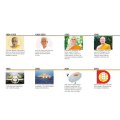
1884-1959
The Great Master Phramongkolthepmuni, Abbot of Wat Paknam. Discoverer of the Dhammakaya Meditation Method.
1909-2000
Khun Yai Chand Khonnokyoong, founder of Wat Phra Dhammakaya (the Dhammak
The history of Wat Phra Dhammakaya traces its origins to influential figures such as Phramongkolthepmuni, the Great Master and discoverer of the Dhammakaya Meditation method. Khun Yai Chand Khonnokyoo
43
Phramongkolthepmuni: The Discoverer of Dhammakaya Meditation
PHRAMONGKOLTHEPMUNI
Discoverer of the Dhammakaya Meditation Method
Famously known as Luang Por Wat Paknam, one of the most Venerated Buddhist monks in the history of Thailand, Phramongkolthepmuni was
Phramongkolthepmuni, born Sodh Mikaewn-oi, was a significant figure in Thai Buddhism. Born on October 10, 1884, in Suphanburi, he displayed unwavering determination and compassion from a young age. Hi
44
The Journey of Sodh: From Education to Entrepreneurship
Sodh helped his parents with their work until he was nine when he began his formal education with his uncle, a monk at Songpinong Temple. In those days, before the establishment of state schools, monk
Sodh grew up assisting his parents and began formal education with his monk uncle. After his father's death, he took over the family rice business, leading it to prosperity. A life-changing moment occ
48
Phramongkolthepmuni: A Legacy of Dhammakaya Meditation
44 PHRAMONGKOLTHEPMUNI
and attention in practicing and teaching his meditation method to the general public.
The Dhammakaya Knowledge that he rediscovered was so profound that he aimed
to use it to h
Phramongkolthepmuni, originally Sodh Chandasaro, became abbot of Wat Paknam Bhasicharoen in 1918. Known for his meditation mastery, he organized workshops leading many to attain the Dhammakaya level.
56
The Miraculous Establishment of Dhammakaya Temple
pinnacle of success as we know today. Chayaboon and Padej were the driving force behind many of Khun Yai's success.
After the ordination of Luang Por Dhammajayo, Khun Yai felt the time was right for
The establishment of the Dhammakaya Temple is a testament to Khun Yai's vision and determination. With only 3,200 Baht, she believed in the power of merit and, on Lady Prayad's birthday, managed to ac
64
Developing true monks